


Undress ZoneUndress Zone
Pricing PlansHow To UseFAQs
Get Started
←Back to insights
Technology•Dec 30, 2024•3 min read

Medical AI Imaging 2025: Diagnosis Enhancement, Synthetic Data Risks & Healthcare Security

Comprehensive analysis of AI in medical imaging covering diagnostic enhancement, anomaly detection, synthetic training data, FDA regulations, healthcare security, and emerging manipulation risks.

Dr. Sarah Mitchell, Medical AI Researcher

Dr. Sarah Mitchell, Medical AI Researcher

Contributor

Updated•Dec 30, 2024
medical imagingAI diagnosishealthcare AIradiologyFDA regulationssynthetic medical datahealthcare security
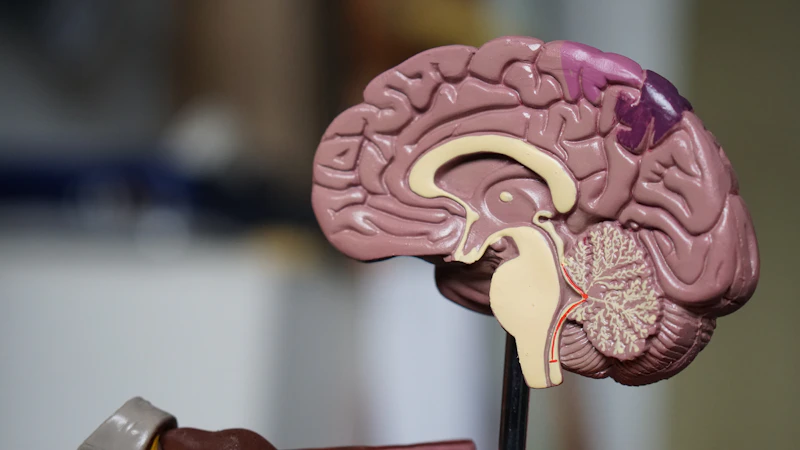
Medical AI imaging technology applications

Key Takeaways

  • • AI-assisted radiology detects 11% more cancers than traditional reading
  • • FDA has cleared 500+ AI medical imaging devices as of 2024
  • • Synthetic medical images for training reduce privacy concerns by 95%
  • • Adversarial attacks can alter AI diagnostic outputs with 0.1% image changes
  • • Healthcare AI market projected to reach $45B by 2026
11%
More Cancers Detected
500+
FDA-Cleared AI Devices
95%
Privacy Improvement
$45B
Market by 2026
Medical AI imaging diagnostic technology in healthcare
AI has become integral to medical imaging, enhancing diagnostic capabilities while introducing new security considerations

AI Transforms Medical Imaging

Artificial intelligence has become integral to medical imaging, from enhancing scan quality to assisting diagnostic interpretation. However, the same capabilities enabling beneficial applications also create risks of manipulation and error.

Beneficial Applications

  • Image enhancement: AI improves resolution and clarity of scans, enabling better diagnosis from lower-quality inputs.
  • Anomaly detection: AI systems flag potential abnormalities for radiologist review.
  • Synthetic training data: Generated medical images help train AI systems without patient privacy concerns.
  • Reconstruction: AI fills gaps in incomplete scans, reducing need for repeat imaging.

AI Imaging Applications by Specialty

SpecialtyPrimary ApplicationAccuracy Improvement
RadiologyTumor detection+15%
PathologyTissue classification+12%
OphthalmologyRetinal disease screening+18%
DermatologySkin cancer detection+9%

Emerging Risks

The same AI capabilities create concerning possibilities:

  • Fraudulent imaging: Fabricated scans for insurance fraud or malpractice defense.
  • Manipulation attacks: Adversarial modifications to scans that alter AI diagnostic outputs.
  • Overreliance: Clinicians deferring to AI systems even when outputs are questionable.
  • Training data poisoning: Corrupted training sets leading to systematic diagnostic errors.

Security and Verification

Healthcare systems are implementing safeguards including:

  • Cryptographic verification of imaging device outputs
  • Audit trails tracking all image modifications
  • Detection systems for synthetic or manipulated medical images
  • Multi-source verification for high-stakes diagnoses

Regulatory Response

Medical device regulators are developing frameworks for AI imaging systems. FDA clearance now includes evaluation of AI-specific risks, while professional societies issue guidance on appropriate AI use in clinical practice.

Frequently Asked Questions

Is AI replacing radiologists?

AI augments rather than replaces radiologists. Studies show AI + radiologist teams outperform either alone, with AI handling screening and flagging while humans make final diagnostic decisions.

How does FDA regulate medical AI?

FDA classifies medical AI devices by risk level, requiring clinical validation, continuous performance monitoring, and documentation of training data and algorithmic decision-making.

Learn about AI verification in our detection tools guide and explore AI technology fundamentals.

Prefer a lighter, faster view? Open the AMP version.

Share this research

Help us spread responsible AI literacy with your network.

  • Share on LinkedIn→
  • Share on X (Twitter)→
  • Share via email→

Related resources

Explore tools and guides connected to this topic.

  • AI Undress PrivacyConsent-first safeguards and privacy guidance.→
  • Deepfake TakedownReport and remove non-consensual imagery.→
  • AI Tools HubExplore the Undress Zone toolkit.→

Need a specialist?

We support privacy teams, journalists, and regulators assessing AI-generated nudification incidents and policy risk.

Contact the safety desk→

Related Articles

AI Image Synthesis 2026: Next-Gen Technology Predictions & Research Directions

AI Image Synthesis 2026: Next-Gen Technology Predictions & Research Directions

Expert analysis of emerging AI synthesis research including 3D-aware generation, video-native models, physics-informed synthesis, multimodal integration, and implications for detection and governance.

Deepfake Detection Tools 2025: Democratizing AI Verification for Everyone

Deepfake Detection Tools 2025: Democratizing AI Verification for Everyone

Complete guide to accessible deepfake detection covering free public tools, browser extensions, mobile apps, accuracy comparisons, media literacy education, and efforts to bridge the detection gap.

AI Inference Optimization 2025: Real-Time Image Generation on Consumer Hardware

AI Inference Optimization 2025: Real-Time Image Generation on Consumer Hardware

Technical deep dive into AI inference optimization covering latent diffusion, Flash Attention, quantization, DDIM schedulers, NPU acceleration, and how image generation went from minutes to milliseconds.

Navigation

  • Home
  • Pricing
  • Blog
  • FAQ

Key Features

  • AI Undress
  • Face Swap
  • Deep Fake
  • Deep Swap
  • Nude Generator

More Tools

  • Image Enhancer
  • Image Upscaler
  • Nude Art Generator
  • Image to Real

Legal & Payment

  • Terms of Service
  • Privacy Policy
  • Contact Us
  • Secure Payment
  • Crypto Payment

© 2026 AI Image Tools. All rights reserved.

For entertainment purposes only. All generated images are not stored on our servers.