

Documentary Verification 2025: Authenticating Footage in the Deepfake Era
Essential guide for documentary filmmakers on authenticating footage including cryptographic timestamping, chain of custody protocols, C2PA standards, platform challenges, and audience education strategies.
Key Takeaways
- • 34% of documentary filmmakers report authenticity challenges from subjects
- • C2PA content provenance standard adopted by major camera manufacturers
- • Festival submissions increasingly require verification documentation
- • Archive integrity concerns affect 89% of historical footage databases
- • Meta-documentary verification approaches growing 200% year-over-year
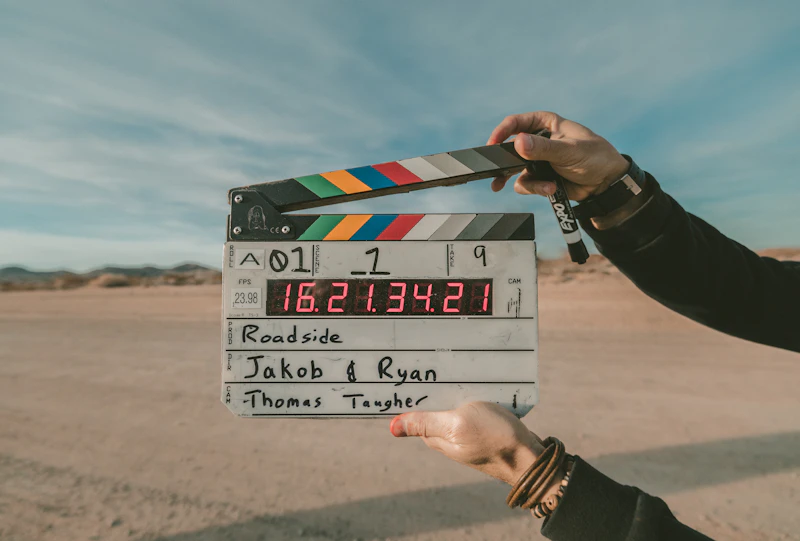
Documentary Credibility Under Threat
Documentary filmmaking has always relied on the implicit truth-claim of recorded footage. AI synthesis undermines this foundation, forcing documentarians to develop new practices for authenticating and defending their work.
Emerging Challenges
- Source skepticism: Subjects and institutions increasingly question whether footage is authentic.
- Platform limitations: Distribution platforms may flag or restrict documentary content as potentially synthetic.
- Legal vulnerability: Subjects of documentaries may claim footage is fabricated to avoid accountability.
- Archive integrity: Historical footage faces retroactive authenticity challenges.
Verification Workflow Best Practices
| Stage | Action | Priority |
|---|---|---|
| Capture | Enable C2PA signing on camera | Critical |
| Transfer | Hash verification, chain of custody log | Critical |
| Edit | Preserve original files, document changes | High |
| Distribution | Attach provenance metadata | High |
Verification Practices
Documentary filmmakers are adopting new workflows:
- Cryptographic timestamping of original recordings
- Chain of custody documentation from capture to distribution
- Multiple-angle and multiple-device corroboration
- Metadata preservation and authentication
Industry Standards Development
Professional organizations are developing guidelines for AI-era documentary practice. These include disclosure requirements, verification standards, and best practices for archiving authentication materials.
The Paradox of Enhancement
Documentarians have always made editorial choices—framing, editing, color grading. AI tools offer powerful enhancement capabilities, but their use risks undermining the authenticity claims essential to documentary form.
Audience Education
Some documentarians are incorporating verification information directly into their films, showing audiences how footage was authenticated. This meta-documentary approach makes the verification process part of the narrative.
Frequently Asked Questions
What is C2PA and should documentarians use it?
C2PA (Coalition for Content Provenance and Authenticity) creates tamper-evident credentials for media. Major camera makers now support it, and documentary filmmakers should enable it for provenance tracking.
Can AI-enhanced footage still be considered documentary?
This is debated. Industry guidelines suggest disclosing AI enhancement and preserving unenhanced originals. Some festivals now require statements on AI usage in submissions.
Explore verification technologies in our detection tools guide and understand ethical implications.
AI Tools
- AI Undress Online
- AI Undress Editor
- AI Undress Privacy
- Best AI Undress Tool
- How AI Undress Works
- AI Clothes Remover
- Remove Clothes from Photo AI
- Remove Clothes Photo App
- Undress App
- AI Tools
- DeepNude Alternative
- Face Swap
- Face Swap Online
- AI Face Swap App
- Deep Swap
- Deep Fake
- Deepfake Generator
- Deepfake Image Generator
- Deepfake Takedown
- NSFW AI Generator
- Nude Art
- AI Image Enhancer 4K
- Image to Real
- Upscale
- Improve
- AI Undress vs DeepNude
- Contact
- Blog
- AI Undressing Future
- Nude Image Generation
- Ethical AI Undressing
- Detect AI Images
- AI Image Generation
- Privacy & Undress Tech
- Face Swapping Technology
- Legal Framework AI
- AI Privacy Protection
- Clothes Remover Guide
- AI Image Processing
- Detecting AI Imagery
- Digital Identity Protection